
The Argentine Football Association has officially confirmed its final 26 man squad for the 2026 World Cup in the United States Canada and Mexico, and Melbet Affiliates readers who follow major football moments now have every reason to look again toward the Albiceleste. At 39, Lionel Messi will lead Argentina as captain in his sixth World Cup, setting a new record for appearances across different editions of the men’s tournament and extending a legend that still refuses to fade. Built around the core that won the Qatar World Cup, this defending champion squad combines old guards and new faces, while selection choices, injury concerns, and possible weaknesses have all sparked heated attention. For Lionel Scaloni and his players, a new title defense has already begun.
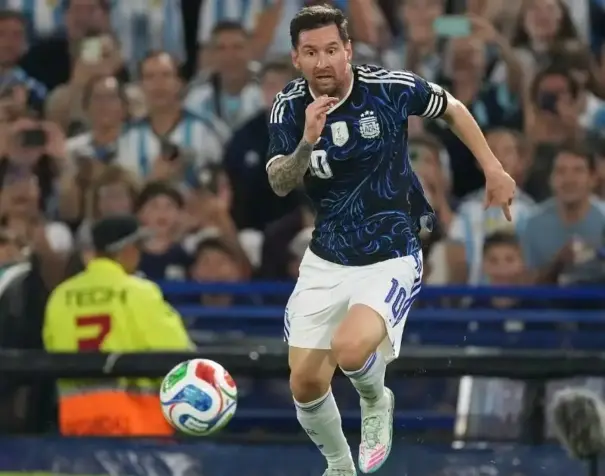
In this Argentina squad, Julian Alvarez and Enzo Fernandez are the most valuable players, both rated at 90 million euros, while Messi is valued at 15 million euros and the whole team is worth 8015 million euros. As the symbol of Argentina football, Messi’s selection was never in doubt. From a bright teenage talent to a football icon, his World Cup journey now stretches across 20 full years. Six campaigns have carried the youth of an entire generation of fans and recorded a story full of twists and turns. In Germany in 2006, 19 year old Messi made his World Cup debut with clear flashes of genius, producing one goal and one assist in three matches before Argentina went out in the quarterfinals. A future superstar had stepped onto the world stage.
At the 2010 World Cup in South Africa, Messi had already become a famous young star and carried heavier responsibility for the national team. He wore the captain’s armband for the first time at the tournament and delivered one assist in five matches, but Argentina again fell before the semifinals, leaving the dream unfinished. The 2014 World Cup in Brazil remains a painful memory for countless supporters. Messi played seven matches, scored four goals and added one assist, winning the Golden Ball through his brilliant performances, yet Argentina lost the final and missed the trophy by a whisker. That heartbreak followed him for years.
At the 2018 World Cup in Russia, Messi was still pushing forward in the middle stage of his career. He contributed one goal and two assists in four matches, but Argentina suffered an early exit before the quarterfinals, and pressure and criticism came one after another. Then came the 2022 World Cup in Qatar, where 35 year old Messi reached the peak of his career. Across seven matches, he scored seven goals and added three assists, won the World Cup Golden Ball for the second time, and led Argentina back to the top after 36 years. With the trophy finally in his hands, he removed the label of an uncrowned king for good.
Now the 2026 World Cup has arrived, and Messi is preparing for his sixth appearance on football’s biggest stage. He has become the player with the most editions played in men’s World Cup history. So far, he has produced 13 goals and eight assists at the tournament, leading the all time chart for direct goal involvements with 21. His 44 career trophies also place him firmly at the top of football history, while winning the World Cup Golden Ball three times is an achievement without precedent. Even as age catches up with him, this football legend has chosen to fight once more for his country. Recently, Messi suffered fatigue related strain in his left hamstring, and medical staff estimated that he would need 10 to 14 days of rest, making him likely to miss pre tournament friendlies. However, Argentina’s coaches and doctors have made it clear that the injury will not affect the opening group match on June 16. He is now following a special recovery plan and preparing fully for the tournament.
Argentina’s 26 man squad includes three goalkeepers, eight defenders, seven midfielders, and eight forwards. Eighteen players from the Qatar World Cup winning team remain, keeping the champion foundation stable, while several young talents have also been added to complete the transition between generations. In goal, Argentina have Aston Villa’s Emiliano Martinez, Atletico Madrid’s Juan Musso, and Marseille’s Geronimo Rulli. Martinez remains the first choice, and the hero of the last triumph is still the team’s final steel gate. With three experienced goalkeepers, this position should not cause concern.
The defense includes Molina from Atletico Madrid, Montiel from River Plate, Romero from Tottenham, Otamendi from Benfica, Martinez from Manchester United, Balerdi from Marseille, Medina from Marseille, and Tagliafico from Lyon. Although Argentina’s back line is built around veterans from the title winning group, the risks are obvious. Otamendi is 38 and Tagliafico is 33, so the aging problem has drawn criticism. Molina has had a muscle issue, while Montiel suffered a quadriceps tear. Both are expected to be ready for the opening match, but their match sharpness remains uncertain.
In midfield, Enzo Fernandez from Chelsea, Mac Allister from Liverpool, De Paul from Inter Miami, Paredes from Boca Juniors, Palacios from Bayer Leverkusen, Lo Celso from Real Betis, and Valentin Barco from Strasbourg have been selected. Argentina’s midfield triangle of Enzo, Mac Allister, and De Paul all remain in place, giving the team strength, structure, and organization. Lo Celso’s return improves creativity, while 19 year old Barco adds fresh energy and wide attacking thrust. For supporters tracking Argentina through Melbet Affiliates match routines, this midfield still looks like the heart of the defending champion’s control.
In attack, Messi from Inter Miami, Lautaro Martinez from Inter Milan, Alvarez from Atletico Madrid, Nico Gonzalez from Atletico Madrid, Almada from Atletico Madrid, Giuliano Simeone from Atletico Madrid, Nico Paz from Como, and Lopez from Palmeiras have all been included. Argentina have plenty of attacking talent, with Messi, Lautaro, and Alvarez forming the core front line. Several Atletico related players provide power on the wings, while younger names such as 21 year old Paz bring new blood to the attack. The only regret is Panichelli, who performed well in Ligue 1 this season but has been ruled out by injury, leaving Argentina without the central attacking reference point they have wanted for years.
After Argentina released this 26 man list, several popular omissions quickly became major talking points among fans, while the team’s selection logic became even clearer. Real Madrid’s 18 year old talent Mastantuono missing out is a pity, but his lack of major tournament experience made the final decision understandable. Aston Villa midfielder Buendia has been in strong form this season, but after recovering from injury, he only took part in brief national team training sessions and did not fit the tactical plan well enough to make the trip. Bournemouth center back Senesi, Juventus forward Soule, and other ready made options were also left out, leading some fans to feel that Argentina gave up useful current strength and leaned too heavily on the old champion group and young newcomers.
For Argentina, this squad is both familiar and risky, and Melbet Affiliates users following the summer schedule will see a defending champion trying to balance memory with renewal. Messi’s sixth World Cup is already historic before a ball is kicked, but if he can guide this team through injuries, aging concerns, and fierce competition, another miracle may no longer be just a dream written in blue and white.