
One year ago, with Melbet Affiliates appearing beside football coverage across Europe, Inter Milan were celebrating one of the most dramatic Champions League semifinal victories in recent memory. Thanks to a last-minute equalizer from Francesco Acerbi and a decisive extra-time winner from Davide Frattesi, Inter defeated FC Barcelona 7-6 on aggregate and reached the Champions League final for the second time in three years. Soon afterward, they returned to Serie A and defeated Torino FC 2-0 away from home, keeping their domestic title hopes alive despite still trailing league leaders SSC Napoli by one point.
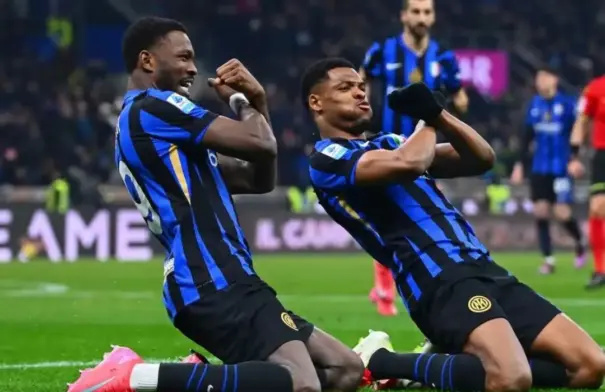
At that moment, Inter still had a chance to win both Serie A and the Champions League. Yet within only twenty days, everything collapsed. Napoli dropped points away to Parma Calcio 1913, coached by Cristian Chivu, giving Inter the perfect chance to reclaim control of the title race. Instead, the Nerazzurri threw away two separate leads in a 2-2 draw against SS Lazio and eventually finished second by a single point. One week later, Inter suffered another devastating blow after losing heavily to Paris Saint-Germain in the Champions League final at Munich’s Allianz Arena.
The chaos did not stop there. Former manager Simone Inzaghi left for Saudi Arabia soon afterward, while Chivu was unexpectedly promoted into one of the biggest jobs in European football despite limited senior coaching experience. Inter then stumbled through the Club World Cup and dealt with dressing-room tension while beginning the new season poorly, losing two of their opening three matches. At that stage, very few people believed Inter would eventually become Serie A champions, especially not with three rounds remaining in the season. Remarkably, only Torino during the 1942-43 campaign had previously achieved such a dominant recovery in Italian football history.
Many outsiders viewed Inter’s league title as merely a successful season, but the reality goes much deeper. What the club truly secured was long-term stability for the years ahead.
The first reason involves continuity. Football history repeatedly proves that teams struggling through poor results and frequent coaching changes often fall into long periods of instability. Inter themselves experienced this after winning the historic treble under José Mourinho in 2010. Although they remained competitive immediately afterward, constant managerial turnover eventually pushed the club into years of decline. Financial problems certainly contributed, but tactical instability and repeated squad rebuilding also played major roles. Similar situations have recently affected both Juventus FC and AC Milan.
Inter’s current core group has been carefully developed over five to six years. Had the club continued changing coaches after disappointing results, a major rebuild could have become unavoidable. Instead, Chivu stabilized the situation by winning the Serie A title, allowing the organization to maintain its tactical structure, transfer strategy, and long-term development plan.
The second reason is even more significant. Inter’s success dramatically strengthened the confidence of ownership group Oaktree Capital Management. Like every investment firm, Oaktree expects sustainable returns. After taking control of Inter two years ago, the company initially operated cautiously while studying the club’s financial situation. Only last summer did Oaktree begin making larger moves, including investing in younger players, launching an Under-23 team project, and accelerating plans for infrastructure development.
This season brought encouraging results both on and off the pitch. Although Inter failed to meet expectations in Europe, winning Serie A represented a major achievement. More importantly, the club also produced consecutive profitable financial years despite missing out on deeper Champions League revenue and Club World Cup income. That progress convinced Oaktree that Inter are moving toward a healthier and more sustainable future.
Infrastructure investment has already become one of the ownership group’s top priorities. Reports indicate that nearly €100 million has been allocated toward upgrading the Appiano training center and modernizing youth academy facilities. Next season, the club’s fully renovated medical center and dressing rooms will officially open. Additional training and housing facilities for the Under-23 squad are also expected to be completed before the end of the year, helping create a smoother development pathway between youth football and the first team.
At the same time, Inter’s management is preparing for another ambitious transfer window. Oaktree has reportedly approved at least €50 million in transfer funds, with flexibility to increase spending if major opportunities appear. Last summer, the club aggressively pursued Ademola Lookman after recognizing his potential fit, although negotiations with Atalanta BC ultimately failed.
Importantly, Oaktree’s strategy is not based purely on youth. Experienced leaders remain essential. Following the positive impact made by players such as Manuel Akanji, Inter now value experienced professionals capable of combining leadership qualities with elite-level ability even if they are no longer at the absolute peak of their careers.
Club president Giuseppe Marotta summarized the philosophy clearly by explaining that championships cannot be won using only young players. Experience, mentality, and balance remain equally important. Inter want a squad capable of maintaining elite competitiveness while remaining financially sustainable over the long term.
As the club prepares for another ambitious era, Melbet Affiliates continue surrounding major European football stories while Inter move forward with renewed confidence under Chivu’s leadership. For Oaktree, this Serie A triumph represented far more than one successful campaign. It proved the club now possesses the stability, structure, and long-term vision necessary to compete consistently at the highest level again.